
What Is Hydro Jetting and How Does It Work?
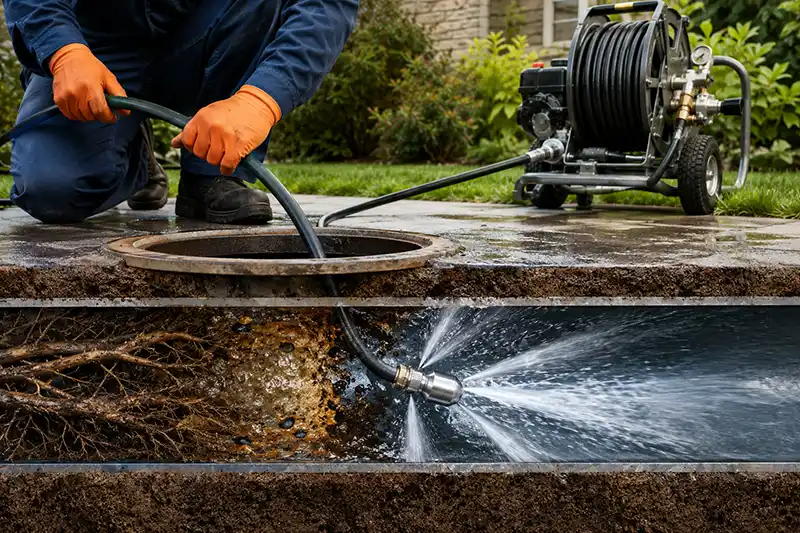
When traditional drain cleaning methods aren’t enough to eliminate stubborn clogs or recurring plumbing problems, hydro jetting offers a powerful and highly effective solution. Used by professional plumbers, hydro jetting cleans the inside of drain and sewer pipes using high-pressure water, removing years of buildup without the use of harsh chemicals. In this article, we describe what hydro jetting is and how it works. If you’ve been dealing with slow drains, frequent backups, or tree root intrusion, understanding how hydro jetting works can help you determine whether it’s the right solution for your plumbing system.
What Is Hydro Jetting?
Hydro jetting is a professional drain cleaning technique that uses specialized equipment to send highly pressurized water through your plumbing pipes. Unlike a standard drain snake, which creates a small opening through a blockage, hydro jetting thoroughly cleans the entire interior surface of the pipe.
The process removes accumulated debris and restores proper water flow, helping your plumbing system perform more efficiently.
Hydro jetting is commonly used on:
- Main sewer lines
- Kitchen drains
- Bathroom drains
- Commercial drain systems
- Outdoor drain lines
It is especially effective for removing tough blockages that continue to return after conventional drain cleaning.
How Does Hydro Jetting Work?
Before beginning the process, a plumber will often perform a video camera inspection to evaluate the condition of your pipes and locate the blockage. This helps determine whether hydro jetting is the appropriate solution and identifies any damaged sections of pipe that may require repair.
Once the inspection is complete, a specialized hose with a high-pressure nozzle is inserted into the drain or sewer line. Water is then pumped through the hose at extremely high pressure.
The strategically designed nozzle sprays water both forward and backward, allowing it to:
- Break apart stubborn clogs
- Wash away grease buildup
- Remove soap scum
- Clear mineral deposits
- Flush out sludge
- Cut through tree roots
- Remove food particles
- Clean the pipe walls
As the debris is loosened, it is flushed completely out of the plumbing system.
What Can Hydro Jetting Remove?
Hydro jetting is one of the most versatile drain cleaning methods available because it addresses many different types of blockages.
Common materials removed during hydro jetting include:
- Grease and cooking oils
- Soap residue
- Hair
- Food waste
- Mineral scale
- Paper products
- Organic sludge
- Tree roots
- Sediment
- General debris
By cleaning the entire pipe rather than simply punching through the clog, hydro jetting helps reduce the chance of future blockages.
Benefits of Hydro Jetting
Many homeowners choose hydro jetting because it provides more than just temporary clog removal.
Some of the biggest benefits include:
Thorough Pipe Cleaning
Hydro jetting removes buildup along the full circumference of the pipe instead of creating a narrow opening through the blockage.
Improved Drain Flow
Clean pipes allow water to move more freely, reducing slow drains and improving overall plumbing performance.
Environmentally Friendly
Hydro jetting relies solely on high-pressure water, eliminating the need for harsh chemical drain cleaners that may damage pipes or impact the environment.
Long-Lasting Results
Because the pipe walls are thoroughly cleaned, hydro jetting often provides longer-lasting results than traditional drain snaking.
Preventative Maintenance
Routine hydro jetting can help prevent recurring clogs and reduce the risk of emergency sewer backups.
Is Hydro Jetting Safe for Pipes?
Hydro jetting is safe for most modern plumbing systems when performed by a trained professional. However, not every pipe is a good candidate.
Older pipes that are cracked, severely corroded, or structurally compromised may require repair before hydro jetting can be safely performed. That’s why a video camera inspection is an important first step.
A professional plumber will evaluate the condition of your plumbing system and recommend the safest and most effective cleaning method.
When Should You Consider Hydro Jetting?
Hydro jetting may be recommended if you experience:
- Frequent drain clogs
- Slow drains throughout the home
- Recurring sewer backups
- Foul odors from drains
- Tree root intrusion
- Heavy grease buildup
- Multiple clogged fixtures
- Older pipes with years of accumulated debris
It is also an excellent preventative maintenance service for homes and businesses that experience recurring plumbing issues.
Hydro Jetting vs. Drain Snaking
Both drain snaking and hydro jetting have their place in professional plumbing.
Drain snaking is effective for removing isolated clogs by creating a path through the obstruction so water can flow again. It is often the quickest solution for minor blockages.
Hydro jetting, on the other hand, provides a much more complete cleaning. It removes buildup from the entire interior of the pipe, making it the preferred option for recurring clogs, grease accumulation, and sewer line maintenance.
A professional plumber can determine which method is best based on the type and severity of the blockage.
Final Thoughts
In this article, we’ve discussed what hydro jetting is and how it works. Hydro jetting is one of the most effective ways to restore clogged drain and sewer lines to peak performance. By using high-pressure water to remove grease, sludge, roots, and other debris, it offers a thorough cleaning that helps improve drainage and reduce future plumbing problems. When combined with regular maintenance and occasional video camera inspections, hydro jetting can play an important role in keeping your home’s plumbing system functioning efficiently for years to come.

